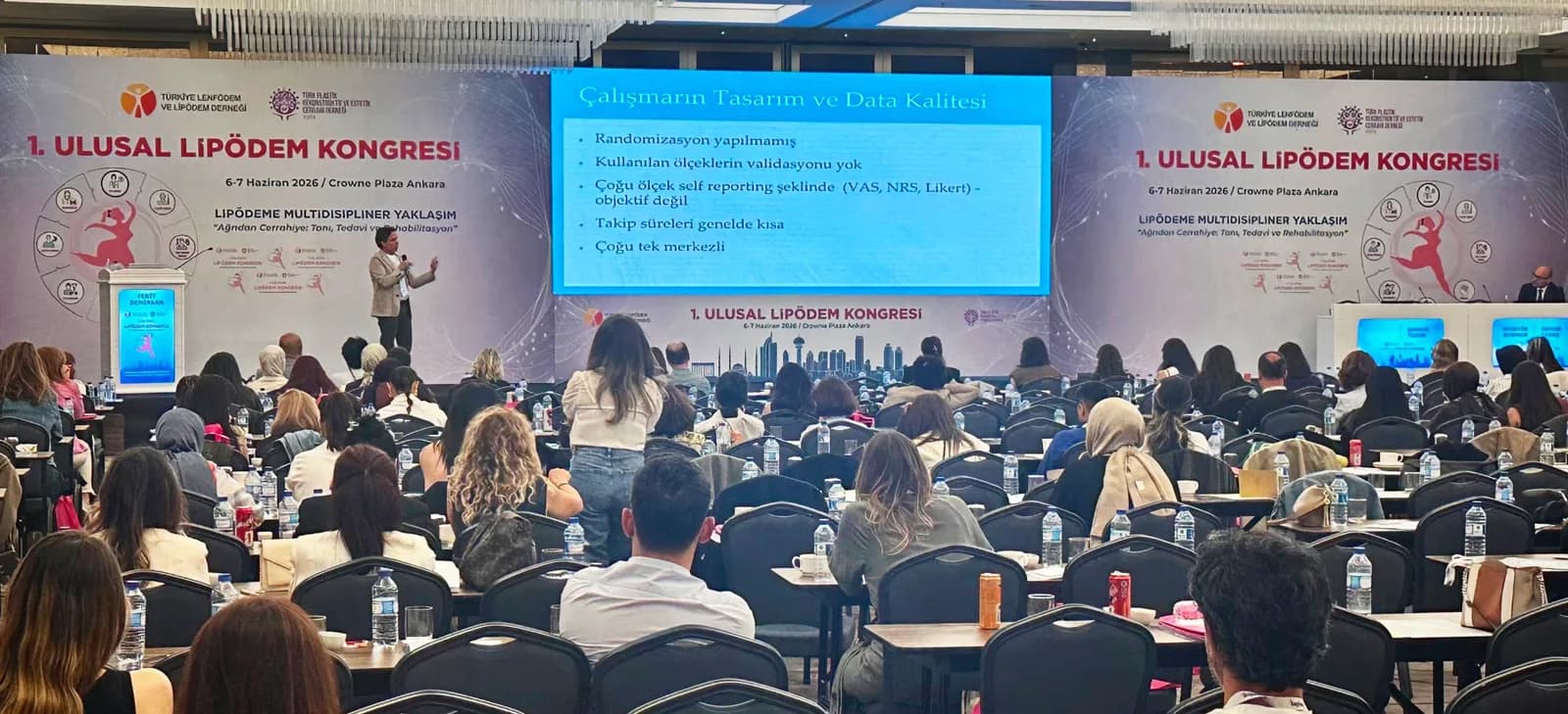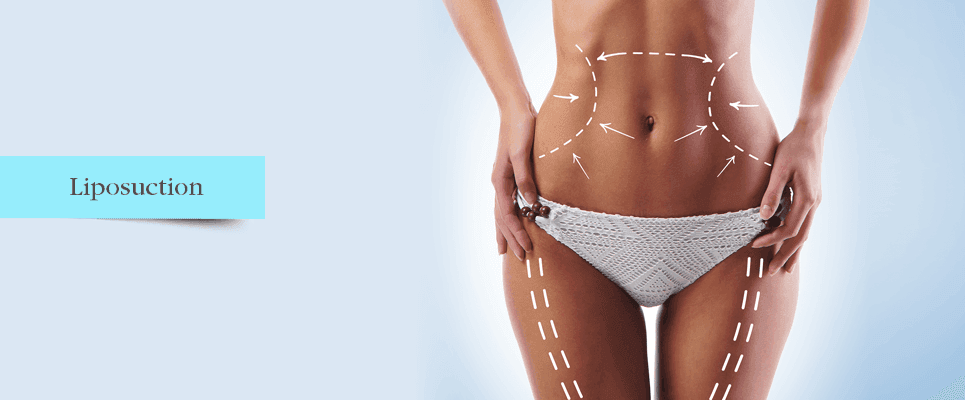
There is no single technique in liposuction, and there does not need to be. Which technology is used is not a brand preference but an indication decision that follows from the patient's tissue and the goal. The programme of the liposuction course held on 15 October 2025 at the 47th National Congress of the Turkish Society of Plastic, Reconstructive and Aesthetic Surgery shows exactly that: most of the five hours went not to which device is better, but to when each one is needed and to the safety side of the work.
The course was listed as Course 5 of the congress and was chaired by Prof. Dr. Ferit Demirkan. The programme is published openly in the congress programme book.
What the programme says first: there are many technologies because there is more than one problem
The topics covered by different speakers on the course were the technological and conceptual evolution of liposuction, Vaser liposuction, laser liposuction, J-Plasma with argon and helium, BodyTite and Quantum, when power-assisted liposuction is needed, harmonic kinetic liposculpture, BBL with ugraft and egraft, abdominoplasty combined with safe liposuction, and liposuction in lipedema.
The length of that list is not a display of abundance. Each heading looks at a different problem: some are about how the fat is broken down and removed, some about what happens to the skin once the fat is gone, and some about where the harvested fat is transferred. In a patient whose skin quality is good, a skin-tightening technology adds nothing. Where the skin is lax, removing fat alone does not improve the result and can worsen it.
Prof. Dr. Ferit Demirkan spoke on three of the headings: the technological and conceptual evolution of liposuction, laser liposuction, and when power-assisted liposuction is needed.
The right question is not which is best, but which and when
It is not a coincidence that one of the programme headings ends in a question mark: when is power-assisted liposuction needed? On the patient side the sentence is usually framed differently: "I want Vaser" or "I want the laser one." These are not competing products. They are tools that come into play in different situations.
What decides the choice is not the name on the device but questions of this kind: the consistency of the fat and whether it is fibrotic, whether the same area has been operated on before, the volume to be removed, the skin's capacity to retract, whether the work is planned in one session or in stages, and whether the procedure is performed alone or together with a lifting operation. These are answered at an examination, not on the internet.
Half the course was not devices, but safety and patient management
This was the most striking part of the programme. The final block of the five-hour course was given entirely to a round table, and its subject was patient management: planning, preoperative preparation, intraoperative precautions, postoperative care and the management of complications. A separate heading was devoted to the safety of liposuction performed together with abdominoplasty.
For a patient this means that what determines the outcome of a liposuction is, to a large extent, not the device but the decisions: how much volume can safely be removed, whether another procedure can be added in the same session, how fluid balance is managed, and what is done when something goes wrong. That a national course gives this much of its time to those questions tells you what the field itself considers risky.
Lipedema was a heading of its own
Liposuction in lipedema appeared in the programme as a separate heading. The distinction matters: lipedema surgery also uses liposuction, but the indication, the tissue and the goal are different. In a woman with lipedema the aim is not contour but a reduction in pain and the preservation of function, and the plan follows from that.
Questions worth asking at the consultation
For someone considering liposuction, these are the practical headings that follow from the course agenda.
- Which technology is preferred for my tissue, and why? What was the alternative?
- Was my skin's capacity to retract assessed? Is tightening needed?
- Is one session planned, or several?
- Is another procedure being added in the same session, and if so how was that assessed for safety?
- How much change is expected in each area, and where is none expected?
The last question is the most telling. A plan that can also say where no result should be expected is more trustworthy than one that only describes where results will come from.