

Abdominoplasty
An abdominoplasty, or tummy tuck, removes excess skin and fat from the abdomen and, where needed, tightens the separated abdominal muscles to restore a firmer, flatter contour. It is most often chosen after pregnancy or significant weight loss, and it is a body-contouring operation rather than a method of weight loss.
Abdominoplasty Types
There are several types of abdominoplasty, each tailored to address specific concerns and goals. Dr. Demirkan will help you choose the most appropriate type depending on factors like the extent of skin laxity and its three-dimensional distribution around your trunk, the amount of fat deposition above and below the umbilicus and in the waistline, and whether you need a concomitant breast procedure or liposuction as well.
Classical Abdominoplasty
This is the most common type of abdominoplasty. It involves a somewhat elliptical incision made from hip to hip, between the pubis and the belly button, allowing for the removal of excess skin and fat from this region. The belly button is incised and its origin is left intact. Striae, which are commonly located within this region, will be excised.
The abdominal muscles might be tightened in the midline, providing a spontaneous toning of the abdomen and a reduction in the waist circumference. The closure of the abdominal defect is performed by first undermining the skin in the upper part of the belly button (the blue areas in the left illustration) and then pulling it down. After this redraping of the upper abdominal skin, a new belly button hole is opened at the level of the navel and it is brought out for repositioning.
This procedure is suitable for patients with significant excess skin and fat only in the upper and lower abdomen. It can be combined with vaser liposuction of the upper abdomen and waist.
Mini Abdominoplasty
A mini abdominoplasty is a less extensive version of the classical tummy tuck. It involves a smaller elliptic excision, typically just above the pubic area, and focuses on laxity concerns in the lower abdomen, which become manifest in sitting or leaning-forward positions. The skin undermining (blue shaded area) is limited, as well as the resultant length of the scar, leading to a quick recovery.
The belly button location is not changed; therefore the vertical dimension of the resection is limited to prevent downward dislocation and hooding of the navel. If there is an associated muscle laxity, the umbilicus may just be separated from the skin, dissection may be extended up to the chest and an endoscopic muscle plication may be performed, after which the umbilicus is sutured back to its original location.
Reverse Abdominoplasty
This procedure is designed to address sagging of the upper abdominal area with minimal or no laxity in the lower part. In such cases a classical abdominoplasty is not possible, as the total laxity in the abdominal wall is not enough to close the defect resulting from the large resection it requires. A mini abdominoplasty is also not possible in these cases, as the tightening effect of a mini abdominoplasty does not extend above the belly button.
In a reverse abdominoplasty, the incision is made in the natural crease below the breasts. A limited skin undermining (area in blue shadow) is performed downwards, and then the skin is pulled upwards and the excess part is excised. It is less common than other abdominoplasty types and is typically combined with other procedures like breast lifts. In some cases the closure scar may traverse the midline, and this might be a nuisance if it is not covered by the breasts.
Extended Abdominoplasty
An extended abdominoplasty is suitable for patients with excess skin and fat extending around the sides and on top of the thighs. It involves a longer incision, often encircling the hips, allowing for removal of more tissue from the upper part of the lateral thighs. The major benefit of this procedure is that it does not only tighten the abdomen but also lifts the outer upper thighs. Muscle plication in the ventral region may be performed if required. This procedure is often chosen by individuals who have undergone significant weight loss and upper thigh liposuction.
Belt Lipectomy
A belt lipectomy, similar to a lower body lift, is an extensive procedure designed to address the entire midsection, including the abdomen, waist and lower back. It involves a circumferential incision around the waistline. It is often chosen by patients who have lost a substantial amount of weight and have excess skin throughout their midsection, but not in the buttock region. Muscle plication and other maneuvers of the classical abdominoplasty are performed when necessary. This procedure requires turning over the patient during surgery. It may be combined with liposuction. The recovery period is longer.
360 Lift
The 360 lift is an extensive procedure which aims to combine a belt lipectomy with a gluteal lift. It is required in cases with extensive weight loss and skin laxity involving the gluteal region as well. In these cases, there is too much skin and comparatively less subcutaneous fat left in the gluteal region. A regular skin excision in that area may cause a flattening of the buttocks. Therefore, preservation of the fat underlying the excised skin is an essential step (as seen in the lower left illustration). These fat flaps are then used as an auto-implant to augment the gluteal projection.
The design and use of this fat flap may show variations between surgeons. A liposuction to slim the waistline and back area is also usually required. The recovery period needs controlled sitting and torso straightening to decrease the tension exerted on the 360-degree circumferential suture line.
Fleur-de-Lis Abdominoplasty
This variation of abdominoplasty is often recommended for patients who have experienced massive weight loss and have skin laxity not only in the vertical direction but in the horizontal axis of the torso as well. None of the above procedures will be adequate without excising a significant amount of skin vertically from the upper abdomen. The resected skin, or its defect, will look like a lily as in the French heraldry (fleur-de-lis). The closure will look like a “T” or “anchor” shape. Fleur-de-Lis abdominoplasty allows for significant removal of excess skin both horizontally and vertically.
Abdominoplasty or Liposuction?
An abdominoplasty indication is straightforward in cases with significant skin laxity in the lower abdominal region. However, there is a major group of patients who have some skin laxity with fat deposition in the abdomen, and for them liposuction seems to be an attractive alternative. The decision between abdominal liposuction and abdominoplasty is a critical one and depends on several factors, including the age, skin characteristics, presence of stretch marks, need for a muscle repair, amount and location of skin laxity, hypertrophic scarring problems, aesthetic goals, physical fitness, lifestyle and the specific issues you wish to address.
In order to decide which procedure you need, Dr. Demirkan would like to see you in person and perform a physical examination. If this is not possible, he would ask for more detailed photographs of your abdomen and a video.
The key issue in this decision is that liposuction is primarily designed for the removal of excess fat, while abdominoplasty addresses both excess fat and loose or sagging skin, along with potential muscle laxity. Moreover, fat removal with liposuction will cause a further increase in skin laxity. The use of tightening devices during liposuction, such as Smartlipo (laser), Renuvion (plasma) or Bodytite (radiofrequency), may not be able to totally correct this building-up laxity.
If liposuction is performed when abdominoplasty is more appropriate, it can lead to suboptimal results, or even dissatisfaction and a revision.
Lipoabdominoplasty
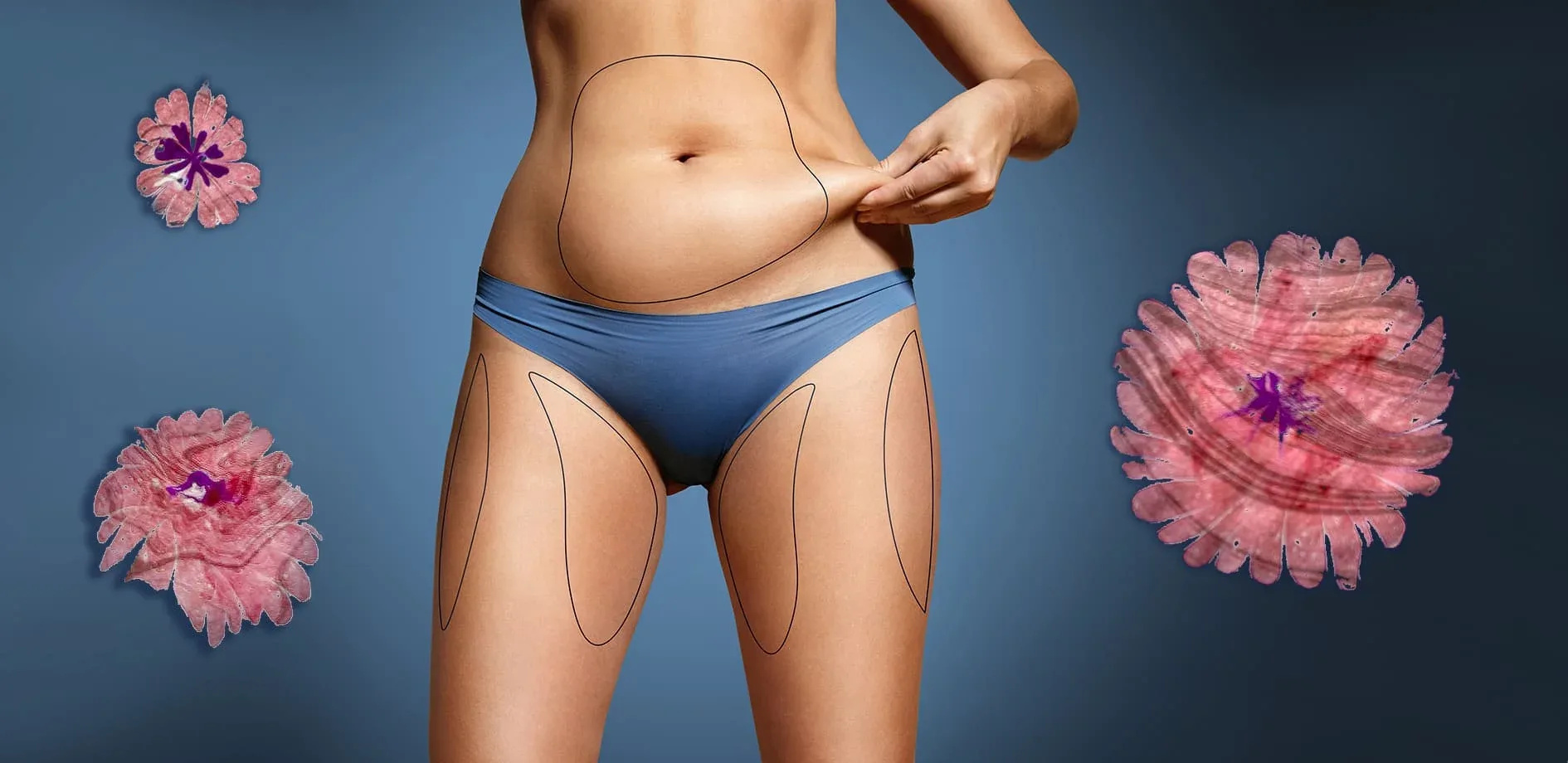
Performing liposuction in conjunction with abdominoplasty in the same surgical session is a technique known as lipoabdominoplasty. It can enhance the overall results by correcting the truncal silhouette. This combination is required in a significant amount of abdominoplasty cases for:
- Narrowing the waistline
- Eliminating love handles
- Correcting the bulges in the bra line
- Decreasing the thickness of the upper abdominal skin (in this part liposuction has to be performed carefully and with special techniques so as not to endanger its blood supply)
Preparation for Abdominoplasty
A proper preparation is essential to ensure a safe and successful outcome in abdominoplasty. It involves several important steps in different departments:
Physicians:
- Ensure you have realistic expectations for the procedure
- Make sure that you shared all the information about your allergies, diseases and previous surgeries with your physicians
- Inform your physician if you have had a serious Covid-19 infection
Weight and Nutrition:
- Best results can be achieved when you are at or near your ideal weight
- Maintain a stable weight before surgery
- Putting on weight during the interim between the initial consultation and the operation date may damage the efficacy of the treatment planned
Medications & Supplements:
- If you are using an ACE inhibitor for your hypertension, ask your cardiologist to replace it with a different group of antihypertensive medications
- Quit oral contraceptives 1 week prior to surgery
- Discontinue any medications and supplements that may increase bleeding risk, such as aspirin, ibuprofen, Vitamin E, ginseng, ginkgo biloba, aloe vera, dong quai, turmeric and chamomile
- If you have to use an anti-coagulant such as coumadin or xarelto, consult your cardiologist; it has to be replaced by daily LMW heparin injections

Prevention of Thrombosis:
- Pulmonary embolization is a feared complication in aesthetic surgery, and for some reason it is more commonly associated with procedures like abdominoplasty or breast reduction. One reason might be the higher fat content observed in most of these patients. In abdominoplasty another cause may be the increased intra-abdominal pressure related to muscle plication. The compressed intra-abdominal organs may press over the big veins coming from the legs, and decreased blood flow may increase thrombotic events in the leg veins in susceptible individuals. Limited mobility after the surgery would also reinforce thrombosis formation
- The presence of varicose veins will definitely increase your thromboembolism risk; therefore they have to be checked by Doppler examination before the surgery, and if there is any serious problem, varicose veins should be fixed first
- There is a group of gene mutations that increase thrombosis risk, such as Factor V Leiden mutation or Protein C deficiency. If you have had a venous thrombosis event before, or if there are such cases in your family, please inform Dr. Demirkan. This way, additional tests may be done or precautions may be taken during surgery
Learn How to Move after the Surgery:
- Due to internal tacking sutures and muscle plication, it is strongly advised not to use your abdominal muscles for standing up, and to avoid a full upright position when walking and standing during the first week after the surgery. Please check our introductory video for information
Personal Care:
- Remove all piercings and nail prostheses before the surgery
- Your fingernails should be without any nail polish
- Contact lenses are not allowed during the surgery
Smoking:
- Smoking cigarettes or hookah decreases the blood supply to your skin and may endanger your wound healing after the surgery. It may even cause skin loss in some cases. Therefore you must quit smoking totally 3 weeks prior to your surgery, and abstain from smoking for 3 more weeks after the procedure
Support System:
- The nursing team will be at your service for all of your needs during the first two days at the hospital. Nonetheless, a personal companion will be beneficial for your well-being, both mentally and physically, during the first week after surgery
Recovery in Abdominoplasty
With an adequate preparation, you may have a smooth and easy recovery period after your abdominoplasty. Dr. Demirkan recommends taking 2 weeks off from work. If you are a travelling patient, you need to stay 8 to 10 days in Istanbul. There will be no sutures to remove, but there will be some swelling that will gradually subside over 4 to 5 weeks. You need to wear a compression garment for three weeks. The final result will be available in about 2 months. You should avoid strenuous activity and heavy lifting (for instance your children) for 6 weeks if you had a muscle repair, as well.
The scar maturation requires at least 6 months and depends much on your skin type and genetic scarring characteristics. Dr. Demirkan uses special barbed sutures for homogeneous dispersion of the tension along the incision line in order to achieve a better scar. Even so, the use of silicone gel creams over the scar with gentle massaging is advised after the second week, for a duration of 1 to 2 months.
In the early recovery phase, you will stay in the hospital for 2 nights, then you will be discharged with one or two drains. They will be removed 2 to 5 days later. During the first week, the most important part of your recovery is getting out of bed or sofa without using your abdominal muscles, and avoiding a full upright position when standing and walking (please refer to our introductory video). It will be helpful to have some company after hospital discharge.
Frequently Asked Questions
Is it risky to have liposuction together with abdominoplasty?
Can I get pregnant after an abdominoplasty?
How long will the result last?
Will I lose weight after abdominoplasty?
Will my abdominal hernia be repaired during abdominoplasty?
Will my abdominal bulging get corrected after abdominoplasty?
Related reading
Related procedures
- LiposuctionThe art of fat shaping, LASER, VASER and VIBRO techniques sculpt areas that resist diet and training for a balanced silhouette.
- Breast AugmentationA short, well-studied procedure to restore or enhance breast volume and shape, with implant choice tailored to your anatomy and goals.
- Brazilian Butt LiftYour own fat, refined and redistributed to create a balanced, naturally contoured silhouette from behind.
Considering an abdominoplasty?
Book a virtual consultation with Prof. Dr. Ferit Demirkan to discuss your goals and a plan suited to you.
Contact us