The two abbreviations people researching hair transplantation meet most are FUE and DHI. Although they are often presented as two entirely different methods, they share the same underlying logic. The real difference lies not in how the follicles are harvested, but in how they are placed. This article compares the two without exaggeration.
What they share: follicles harvested one by one
Both FUE and DHI use the follicle-based (follicular unit) approach that forms the basis of modern hair transplantation. In both, follicles are extracted one by one from the donor area, usually the nape, with a micro-punch (a circular, hollow, thin tip). The harvesting stage is therefore largely the same in both methods. So it is not correct to say "DHI is one harvesting method and FUE another"; the distinction appears at the placement stage.
The core difference: the placement stage
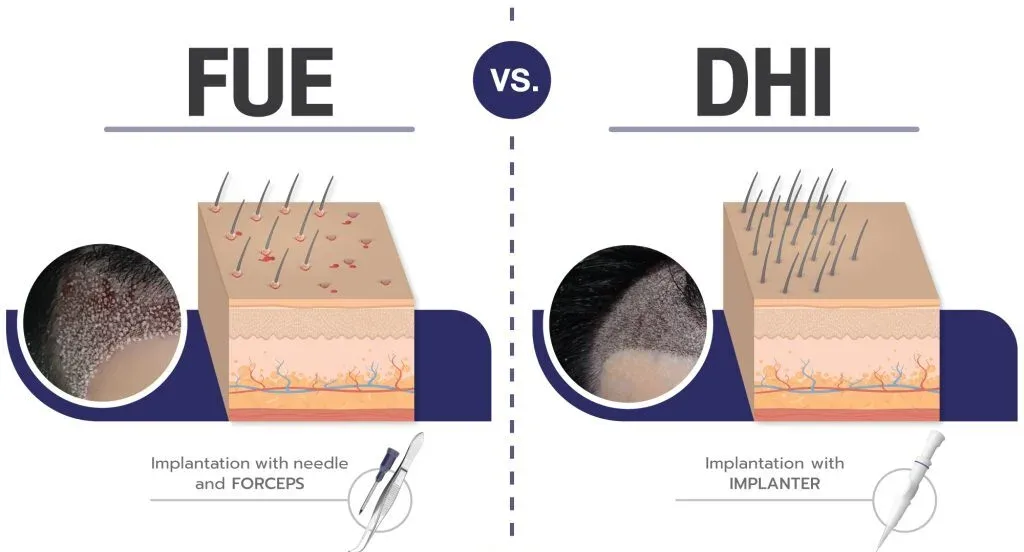
Among the classic techniques, FUE splits the work into two separate steps: first, fine channels are opened in the recipient area; then the harvested follicles are placed into those channels one by one. Because channel-opening and placement are separate steps, the angle, direction and density can be set during the channel stage.
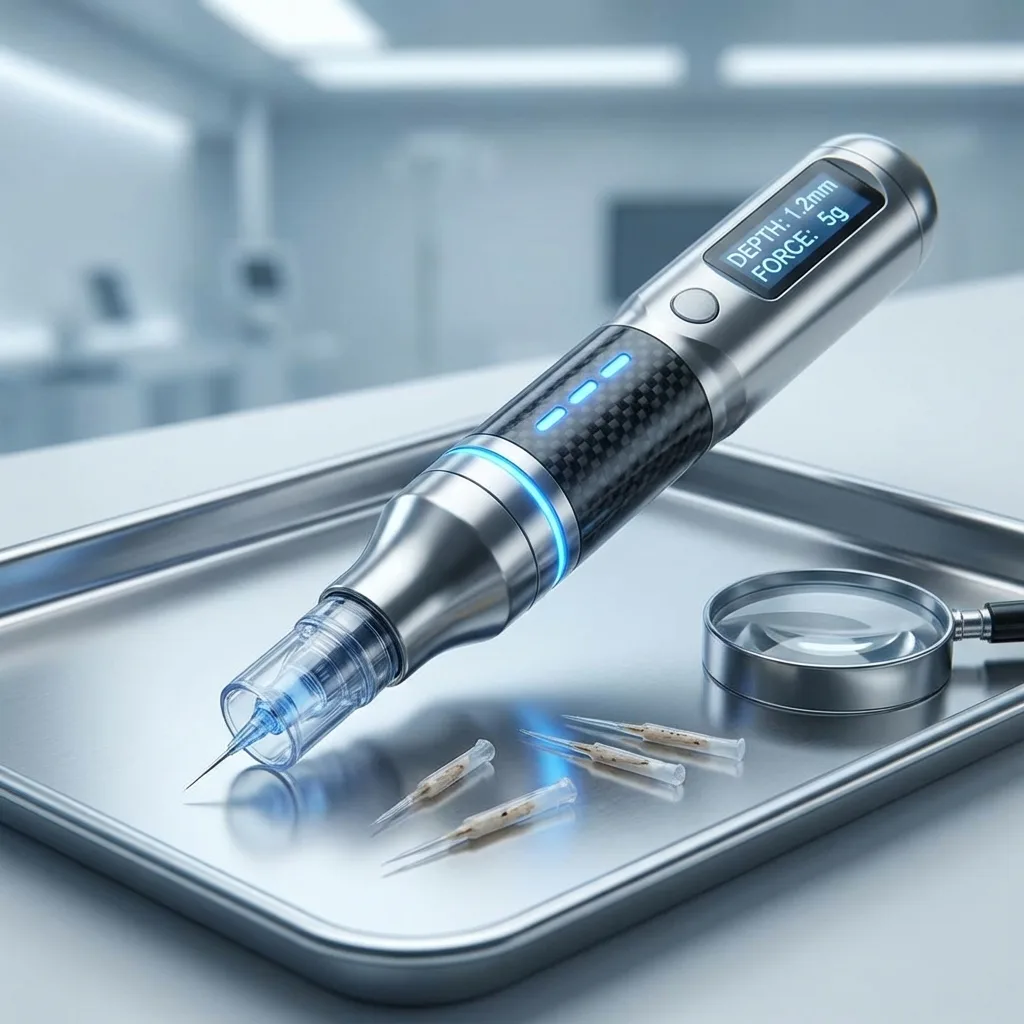
In the DHI (Direct Hair Implantation) method, a pen-like implanter called a Choi pen is used. Thanks to the fine needle at its tip, opening the channel and placing the follicle happen in a single motion, at the same time. There is no separate channel-opening step; the follicle is placed directly into the skin via the pen.
How the two compare
The follicles are harvested one by one with a punch in both techniques. In FUE, channel-opening is a separate step done in advance, and placement is a later stage into those channels; in DHI, channel-opening and placement happen together via the Choi pen. Density and angle are planned at the channel stage in FUE, and at the moment of placement with the pen tip in DHI. FUE usually requires shaving, while DHI can be done without shaving in limited areas. Because of the pen, a DHI session can take longer than FUE.
Density, angle and donor healing
Because DHI opens the channel and places the follicle at once, the chance of harming surrounding follicles when implanting between existing hairs can be lower, and dense placement more controlled. In FUE, opening the channels in advance allows planned direction and distribution over wide areas. Both can give a natural look in the right hands, what matters is the care of the application, not the name of the technique. Since the harvesting stage is similar, donor-area healing is largely similar too: micro-punch points usually heal quickly without a noticeable scar, with healing speed depending on tissue characteristics, donor density and aftercare.
Which suits whom?
DHI may be preferred where dense placement is needed in limited areas, where implanting between existing hairs is required, or where unshaved application is a priority. FUE can be practical over wide balding areas and where many grafts must be distributed in a planned way. Ultimately there is no "better" choice between the two; the right method depends on the person's donor capacity, degree of balding, existing hair and expectations, and is best clarified after a personal examination.